Student Life
Round Square

- 2023
- 2019
- 2018
- 2017
- 2016
- 2014
- 2013
DAIS students of grade 11 embodied the spirit of service as they headed to Panna for a service project to work on the health camp for the local forest community. The project was hosted by Daly College from 14 to 17 March 2023.
This project aimed at sensitizing the villagers about the need for healthcare and methods of maintaining sanitary living conditions. This community service involved building awareness regarding hygiene amongst women, eye care and cleanliness in the residential area of the local community and beautification of the local school.
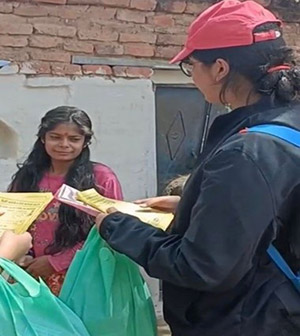
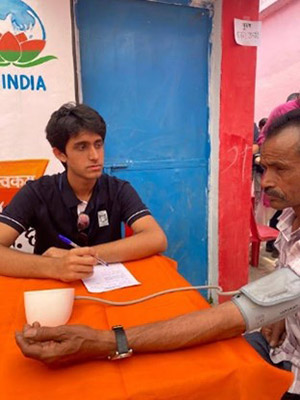
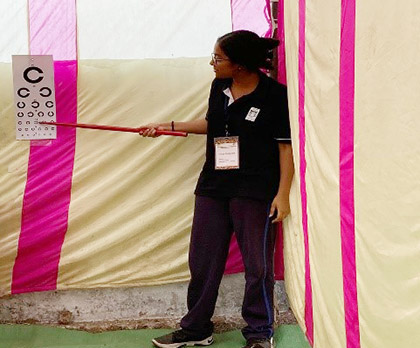
In preparation for the health camp, students underwent training for checking eyesight, measuring height, weight and temperature in preparation for the upcoming health camp. In addition, they rehearsed a street play to perform for the village folks promoting the health camp in the village of Basata. The students also did door to door campaigning, urging people to attend the health camp, while also de-stigmatising menstrual cycles, helping the women learn hygienic menstrual practices and handing out menstrual pads. At the health camp students worked various roles like measuring blood pressure, height, weight, crowd management, and conducting the eye check-up. Working tirelessly from 10 am to 4 pm, the students did their best to ensure that everyone who visited the camp was able to receive the help they needed. Interacting with the villagers was truly a humbling experience for all!
The students also got the opportunity to connect with nature in the surrounding forest area during leisure time, as they did a jungle trek, learning about the local flora and fauna. Here is what the DAIS delegates felt on attending this service project:
Anya Sharma: “The gratifying experience of volunteering at the eye camp in this service project helped me gain a deep insight into the day-to-day hardships faced by the underprivileged living in rural India. It made me realize why learning is a two-way process as I understood the problems the villagers faced, and they got aware of the health problem and available cures. Campaigning in villages where people spoke a different language, I was amazed to see how we were able to break that barrier and spread an important, yet tabooed, message on awareness of menstruation. Thus, this once in a lifetime opportunity engaged, enabled, and empowered me to help create a change for the better in the lives of the people living in the villages of Khajuraho”.
Aryan Datwani: My trip to the Panna tiger reserve started off as just a school trip, but turned into an unforgettable experience for me. Helping the nearby villagers by organising the eye camp enabled me to learn a lot about them. While spreading awareness and distributing flyers around the village I was exposed to their way of life as I explored the quaint and peaceful town of Basata. While working at the camp I was exposed to the plight of the villagers and the various health problems they faced due to the constant stress of work and harsh living conditions. I was fortunate to be able to aid them as it was an extremely enlightening experience for me as it taught me to not take my life for granted
Prisha Goyal: “This project has engulfed me with a sense of gratitude, empathy, and fulfilment as I got the opportunity to interact with rural communities and gain an insight into their challenging lifestyles. Walking through the villages while trying to destigmatize taboos such as menstruation and creating awareness about health was a very rewarding experience for me as I felt like I personally made an impact on the less privileged. Additionally, I feel fortunate that I was able to participate in the health camp by providing healthcare facilities and services myself despite the language barriers and physical discomforts. Overall, being able to touch the hearts of almost 600 people in the course of only 6 hours not only inculcated me in a sense of purpose, accomplishment, and satisfaction but also fostered a sense of community and social responsibility and personal growth”.
Durga Chatterjee: Volunteering for this camp was an extremely gratifying experience. It made me realize the lack of healthcare in the rural areas of India and how important it is to resolve it. I helped with the eye screening, working together with the villagers to figure out the wellness of their eyes. It gave me joy interacting with them, bringing a smile to their face, and knowing that I am contributing to their welfare. I was also given the opportunity to disconnect from technology and bond with nature. Going on a nature walk, a boat ride in the river and simply looking up at the pollution free sky full of stars.
Ishaan: Stepping outside your comfort zone to undergo a multitude of new experiences is something I previously feared, but this service project has entirely altered my mindset. To interact with locals, enter their households, and understand their lifestyle was truly an enriching venture. The grateful glances we received when handing out free eyewear was worth every moment of effort we put into setting up the camp. However, it wasn’t all sunshine and rainbows. We heard about their hardships and struggles, and simply having people to talk to and console them seemed to lighten up their mood. Alongside our service work, I made friends from around the country who I'll never forget and had especially memorable safari and boating endeavors.
Karan Verma: I view this service project as a great test, not only of my ability to weather conditions outside my comfort zone but also to interact with people, especially with the large numbers I had at the eye camp, and those of a different socio-economic background and mother tongue from me. However, it was worth it just to know that I had played a part in improving the overall living conditions that the residents of Basata village faced and made new friends and experienced new things along the way.
Nysa Agarwal: My experience working at the eye camp, sitting next to the villagers, and assisting them with the eye screening procedure was extremely fulfilling. Understanding the concerns of the people and seeing the relief on their faces when I reassured them that they would get the help they needed made me feel very grateful that I could do this for them. Meeting people of all ages and helping them was a rewarding experience and I was glad that i could aid them in improving their health. This service project was very meaningful, and I am thankful that I was able to provide these services to those who were unable to access them otherwise.
The Ladakh Service Project and Trekking expedition at the Thiksey Village was one of the greatest experiences of my life. It was the most complete trip in terms of feelings and emotions. There was adventure, thrill, hard-work, fear, content, friendship, sadness and anticipation. The sixteen days that I spent on the trip, whether it was building the rooms, trekking up the mountains or even sitting at the dinner table reading reflections- was so much fun that I would not mind doing all of that again.
We spent two days at Leh, acclimatizing to the high altitude and also getting to know each other. Mixing with the group and trying to make friends was difficult at first because we were very much different from them, but after talking about schools, sports and future aspirations, we did make friends. After two days in Leh, we left for the Lamdon Model school in Thiksey Village. After a warm welcome and cultural program, we were asked to rest and in the evening, we began collecting bricks from the kiln and stacking them at the construction site. The bricks were 7-8 kgs and because it was the first day, they felt heavy and the dust was disturbing. We used dust masks, gloves and clothes to protect ourselves. This was the first time I did labor intensive work and it was a very new, different and fun experience. I also really liked that for the first time, we actually worked as a group.
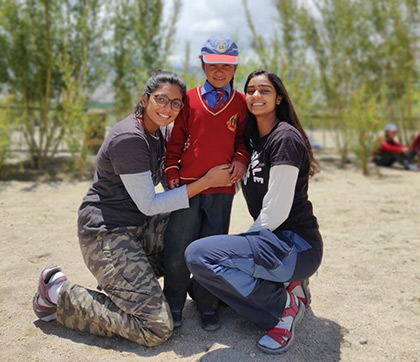
The next three days was construction work. We passed bricks and cement. Surprisingly, with the passing days we grew immune to the dust and the weight of the bricks and the cement. We made long lines and passed them from one end to another and also passed them on to the masons who were making the walls.
The day we visited the Tso Moriri lake was one of the longest days on the trip. We woke up at 4:50, left at 6:00 but only returned at 8:30 at night. It was around 13-14 hours of travelling for an hour of visiting the lake. Although the lake was beautiful and the drive was scenic, it was way too long and most of us were tired at the end of the day. The night before we left for the trek, we had a cultural evening where was saw traditional Ladakhi dances and we also put up three performances. It was a very good farewell and the last moments in the Thiksey Village.
The second part of the trip, the trek is also an experience I will never forget. Firstly, I learnt that the things I thought I couldn't do, were not intact that difficult. I just had to be more strong mentally.
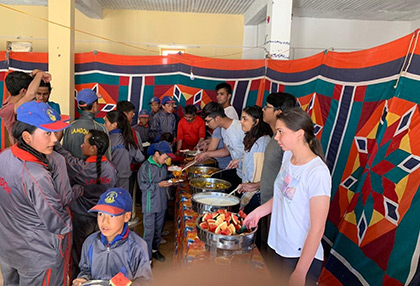
The first day of the trek was easy and not that long. The second day of the trek for me was life changing. It was an optional trek and we were allowed to do as much as we could and then turn around. After going two hours into the trek, I was all ready to give up, turn around and go back to the tents. But after a little motivation and encouragement from my fellow delegates, I almost went up to the summit. I trekked for more than seven hours that day and realized that it was not that I could not do things, it was just that I never believed I could
The fourth day of the trek. A day I will never ever forget. The longest and most adventurous trek I ever did.
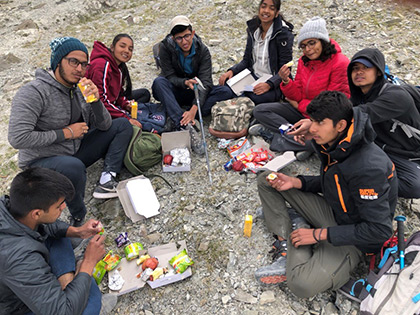
My day started with fear. I was too scared to even start the trek because I was fully convinced that I would not be able to make it to the top. But by maintaining a constant pace and taking breaks at regular intervals, I made it to the top which was one of the most special moments of my life. We took a lunch break for more than an hour on the middle of the mountain and mixed whatever we had to make whatever we could to eat. Then we danced our way down which was the best was to release the stress of going up. After two hours or so of coming down, we did not know where we were going. We were lost. We looked for any hints that’d tell us that our teammates had gone on the same road. It started raining and we had no rainwear. But through all these difficulties and problems, we soon realized we were on the right track and finally reached our destination after more than 10 hours.
The fifth day of the trek was the easiest. It was a short two hour walk to the cars. It was a nice, gradual walk with not much up or down hill. Although a report is too less to summarise the emotions and experiences of the Ladakh trip, I have tried to put in all that I could, as much as I could. These 15 days have been the most special days of my life and I would forever love and want to go on the same trip all over again.
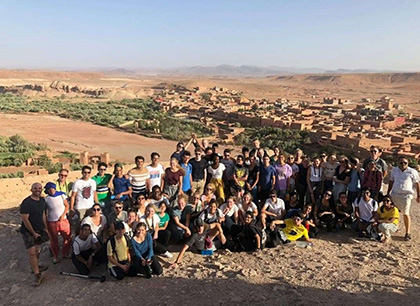
Our trip to Morocco was for 14 days where we were joined by 60 other students from 18 other countries. For the majority of the trip, we lived in a small village in the Atlas mountains called Tachadirt. All 60 of us were divided into three teams with whom we did all our activities, like building the classroom, the pathway and attending the cultural days.
Classroom: During the course of the project, each group spent 3 days working on building a classroom for girls in the village of Ait Souka 40 minutes away from the village we were staying at. The main tasks involved in constructing the school included transporting bricks and sand, mixing cement and plastering. We were fortunate enough to be surrounded by a team of inspiring local workers who motivated us and guided us with the tasks we needed to finish for the day. Some of our highlights from our time at the classroom construction site include the yummy snacks and tea brought to us by the local villagers. We were and still are in awe of their incredible hospitality and warmth- which made Ait Souka feel like a home away from home. At the site we also had the opportunity to interact with some of the local children like Malak, Hussain and Zachery whose compassion and kindness we will never forget. At the end of the project when we saw our completed school we all felt an incredible sense of satisfaction and accomplishment knowing that all of our efforts paid off!
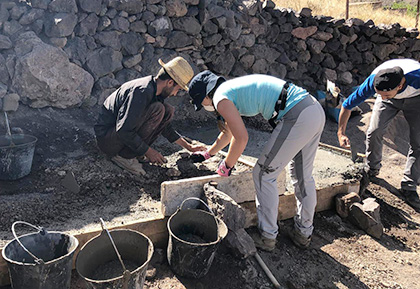
Pathway: Along with the classroom, we spent 3 days working on a work-site 5 minutes away from where we stayed. Out here, we would help the locals build a pathway from the local village to the main road on top of the hill. We mainly spent our time breaking big rocks, collecting smaller rocks, carrying sandbags, preparing and making cement, and finally making the steps. We made chains to transport sandbags and rocks to where they were needed, which made our job significantly easier and faster. The locals who worked here everyday acted as mentors and guided us every day, ensuring we would be able to carry out the tasks efficiently without getting injured. By the end of the project, we managed to connect the pathway from the bottom to the top of the hill which made it much easier for locals to go to the road on the top of the hill. After climbing the 300 steps which we made throughout this time, it is safe to say we were all proud of what we managed to accomplish. We knew that this would help all of the locals in the village a lot which made us extremely satisfied.
Cultural days: The cultural days acted as a rest day from the hard work we did on the pathway and classroom. Our first cultural day was the Sidi Carambouch hike, which was difficult but acted like the perfect opportunity to bond with our group mates and speak to one another. On our second cultural day we learnt how to cook a Tagin, a traditional Moroccan dish with meat, carrots, potatoes and spices. We also visited the home of a villager who gave us insight into Moroccan culture and their daily lives. The most incredible thing we were able to witness was how the villagers having so little were still so content and happy with what they had. We also found many similarities between Moroccan and Indian culture, like long weddings to the treatment of guests. On our third cultural day, we went to the markets in Imil and a neighbouring village. The markets were vibrant and filled with colourful scarves pottery. On the same day, we also visited an Argan oil factory where we learnt how Argan oil is manufactured. At the end of the trip, we had two more cultural days to end the entire experience. On the first, we went to the UNESCO world heritage site, Ait Benhaddou which is an ancient city built by the Berber people. We took many photos and learnt a whole lot about Moroccan history. On the second, we visited a film studio where movies such as The Mummy and The Gladiator have been shot. On our last evening in Morocco, we went to the Medinah or the main square in Marrakech. The Medinah was bustling with thousands of people and unfortunately filled with animals being forced to dance for tourists. The Medinah just like the markets in the villages was colourful but was much larger. The cultural days were a great way to socialise with our friends while learning about Morocco and its unique culture.
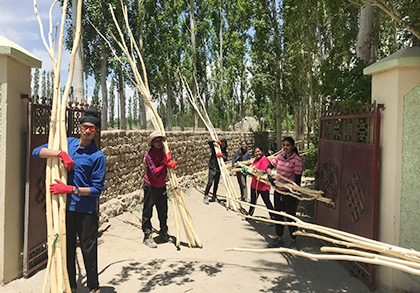
Students of Class 10, travelled to Noida to attend the Round Square Service Project hosted by Genesis Global School. This was a Round Square conference with a difference since its aim was to organise medical camps in Noida for underprivileged people who have no access to basic medical care.
On the day of their arrival, students were assigned to their respective Barazza groups, each named after famous rock bands. The student organising committee had taken care to allot each of our delegates to a different Barazza group. This afforded them an opportunity to move out of their comfort zone and establish friendships with delegates from other schools. They were also lodged as per their groups and not as per their schools. In the evening, the first keynote speaker, Mrs Sangeeta Tiwari of St. Jude’s Home, set the note for what was to be the spirit of the project. She highlighted the efforts of her organisation in providing accommodation for children below 15 years being treated for cancer. In her moving address, she gave the delegates an insight into the vision of their founder, Nihal Kaviratne, who had been inspired by the sight of homeless families camping on the pavements outside Tata Memorial Hospital, Mumbai.
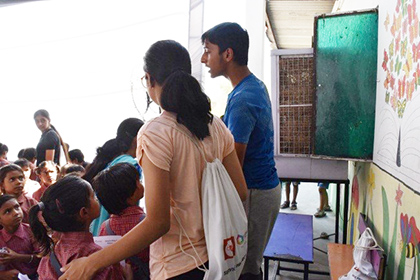
Later in the evening, an icebreaker session was held in the presence of Mr. Ajay Singh, the Principal of the CBSE section of the school. The students thoroughly enjoyed interacting with each other and presenting a product publicity campaign that they had to put together in half an hour.
The briefing at the end of the first day gave us an insight into the vision behind the organisation of the prime activity of the Service Project- the medical camps in Noida on the second and third days. The delegates were divided into teams that moved into the slums near the venue to help in spreading awareness about the camps and to motivate people to benefit from the facilities offered.
On Day 2, the camp was held at the Community Centre in Noida. It offered diagnostic services in General Medicine, Dermatology, Ophthalmology, Dental Care and Gynaecology. There was also a counter for dispensing of medicines prescribed.
The student delegates manned the registration counters, prepared the case papers and also conducted the preliminary investigations such as checking height, weight and blood pressure.
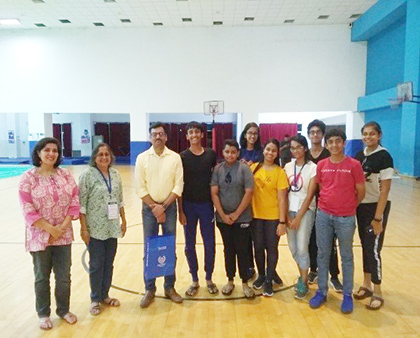
They were also posted at each counter to help in crowd management which was a stupendous task, given the overwhelming response to the camp. The response in the early hours of the morning seemed lack-lustre but as news spread by word of mouth, the camp venue was flooded with patients. The responsible task of dispensing the medications prescribed was assigned to the teacher delegates.
The delegates were moved by the awareness that basic good health care that we take for granted was denied to such a large segment of the population due to their economic status. It was indeed a humbling experience and a real eye-opener for them.
One team that was artistically inclined was allotted the task of beautifying the walls of a temple. After an exhausting medical camp on the second day, the delegates visited the St. Jude’s Home to touch the lives of young cancer survivors and to bring sunshine into their lives by dancing and singing with them. They were immensely moved by the cheerful spirit of the children in the face of such adversity in their young lives.
A Social Evening was organised on the evening of the third day. The students were treated to local delicacies and danced the evening away in the company of their newly-found friends.
On the fourth day, the students departed from Genesis Global School. They returned to Mumbai having formed new friendships, made memories and having touched dozens of lives with the service they provided. They also returned home with a renewed appreciation for all that they have been blessed with in life The student delegates were:
Manav Shah, Praruj Sampat, Jash Bhatia, Tarush Fitkariwala, Parvati Sreeraman, Kamya Parekh, Rajjoyi Sarkar and Nandini Krishnamoorthy.
The teacher delegate was Ms Smita Ullal.
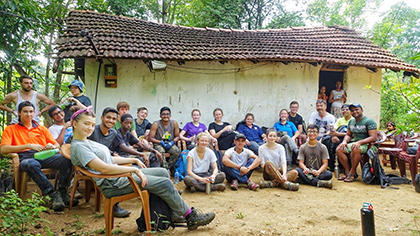
The Round Square International Service project worked in collaboration with Project Orange Elephant which is a project set up to protect farmers and their property from wild Sri Lankan elephants. As part of the Environmental Project we had to plant orange trees in order to form a natural fence to keep out these wild elephants. It has been experimentally proven that the scent of citrus plants deters elephants, orange being a hardy crop was an ideal choice. Throughout the duration of the project we planted approximately 230 orange trees across the village. Other than protecting the farmers, these trees also provide them with an additional source of income thus providing a beneficial solution to the problem.
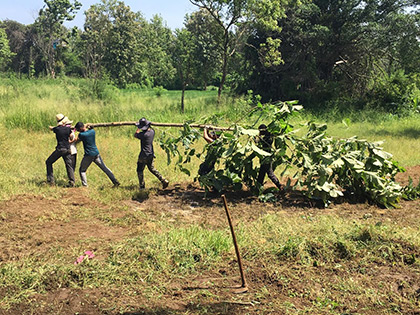
This trip wasn’t like any other service trip that I have ever been on. The holes that we dug to plant the trees, taught me my first lesson. Never Give Up. While digging these 2 feet by 2 feet by 2 feet holes, we came across rocks, 3-inch-thick roots, unbearable heat and excessive sweat but, we never gave up. I was pushed to my limits every day and every hour, but I barreled forward and was able to deliver what was expected of me. The friends I made in the group were my strength and lend me support whenever I needed it. We were there for each other whether it be providing an extra hand to dig holes or picking out each other’s callouses. I had never imagined that I could have made such great bonds with people from across the world, like Australia, Bogota or even Scotland. This project taught me the skill to form everlasting bonds and connections, my second lesson.
One moment that has been engraved in my mind would be when we went for a safari in Wasgumuwa National Park as part of our cultural experience. After a rather unsuccessful 2 hours of not seeing any elephant and just being entertained by our never-ending banter and numerous sightings of peacocks and chameleons we happened upon a clearing. Now, let me offer you the privilege to paint this image in your mind. Thirty plus elephants trumpeting and flaying their massive ears were gathered right in front of us. We could see the very scars on their thick leathery skin and almost smell the fresh, wet mud beneath their feet. Between these elephants were scattered numerous peacocks and peahens. Some with their magnificent array of colorful feathers on display. To multiply the beauty of this image, add massive mountains across the horizon and a sky filled with all shades of orange. And finally, the red sun setting beyond the mountains. This, as you might have guessed left the six of us in the jeep awed and watching in silence. Those 10 minutes were the longest and most treasured minutes of my entire trip to Sri Lanka.
This trip also taught me the difference between my needs and wants. All we needed and had was a bed, food and clean water, everything else was considered a luxury. I learnt that you don’t really need much to survive and enjoy life. I washed my own clothes, made my own tea, woke up by myself and even learned to eat my food without any spices. This, to me was life changing. After the trip I have vowed never to complain about any petty problems like the food I eat or the bed I sleep in or anything of that sort. I almost feel enlightened. This taught me my third lesson. To know the difference between your needs and wants.
Being part of this Project, I was also able to experience the joy of giving. The entire RSIS Sri Lanka team donated numerous items to the local school and students. Things ranging from footballs to clothes to erasers to toothpaste. I feel extremely lucky to be part of this donation drive as it let me experience firsthand the smiles of extreme joy or the looks of wonderment on the children’s faces when they opened their bag to find a sparkly pink pencil or a smiley eraser which otherwise would just pass of as any other ordinary stationary item for most of us. This taught me a lesson quoted by one of the greatest men in my country’s history, Mahatma Gandhi. Be the change you want to see in the world. By giving just a small football to the local school we might have just given some children the incentive to attend school. This is bringing change in its purest form.
Lastly, at our final dinner all the delegates formed a circle along with the project leaders. Holding hands and trying our best to not let that lone tear escape. One of the project leaders solemnly said,” The work, the heat, the injuries, those aren’t the hardest parts. This is. Saying goodbye.” Around the circle numerous teary-eyed individuals nodded in unison. Throughout this trip we had gotten so used to eating, sleeping and talking to each other that the idea of never seeing each other again really took us all by surprise. After 14 days, I was able to feel this connection with these people, people I had no idea even existed 14 days back. That goodbye taught me my last lesson. Cherish what you have while you have it. Those last hugs, those last smiles, those last goodbyes still bring a tear to my eye and a smile on my face as they remind me that nothing lasts forever and that you have to learn to let go.
Thirty hours of flights and airports, bucket showers, and washing our clothes by hand was definitely worth our two weeks spent in Ecuador. As a part of the Round Square Big Build, 49 students from across the world helped to build a multi-purpose center and a childcare center for a small community in Puerto Rico situated in Puerto Lopez, a fishing village, in Ecuador.
Our journey began from Newark Liberty International Airport on the 9th of July, and began with excitement, anticipation, and joy as we mentally prepared for the life-changing experience that lay ahead. We each had one medium sized suitcase and one backpack with all the essentials we needed for the trip, and a little more. Unsure of what to expect, we couldn’t wait to meet the forty-six other students and begin work in the village. Our camp, Camp Costa, was a mere four-hour drive from the José Joaquín de Olmedo International Airport.
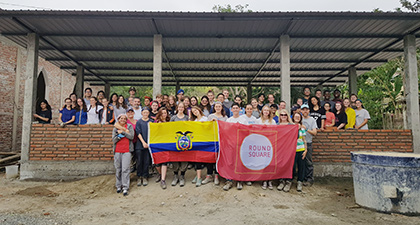
This warm, welcoming, and comforting place would be our home for the next two weeks. Our two worksites were very close to the camp as well. The multi-purpose center worksite was a thirty second walk from the camp and the childcare centre worksite was a five-minute walk from the camp. We worked at these sites for a total of 12 days, and accomplished plenty during this time. We worked in teams of eight to ten, allocated to us at the beginning of the trip. Each team would select a leader and a deputy leader for each day to look over the group and make sure that every member is hydrated, healthy, and well equipped for the day. A usual work day would consist of two teams working at one site and the other three working at the other site from 8 AM to 12:30 PM with water breaks in between, after which we would return to the camp for lunch. After lunch the teams would switch sites and work from 2 PM till 4:30 PM after which we would head back to the camp to shower, socialise, and relax after a hard day’s work
Our work included jobs like making concrete, delivering materials, brick-laying, varnishing, sawing, painting, hammering, and more. Although some of us didn’t like some jobs, for example making concrete, we fought through the urge to give up and continued with an undying spirit of determination. Each job taught us a lot about ourselves and about our teams. By working with such a diverse group of people we learned a lot about other cultures, countries, and even our new friends.
Between our work days we had two excursion days. On the first we went to the Machalilla National Park, here we visited the museum and hiked to admire the stunning views, where we had the opportunity to try on mud masks from the lake of a volcanic crater. Our second excursion day included hiking and snorkelling at Isla de la Plata, renowned for its marine birds and wildlife. We were lucky enough to spot humpback whales, turtles, manta rays, turtles and vibrant blue footed boobies.
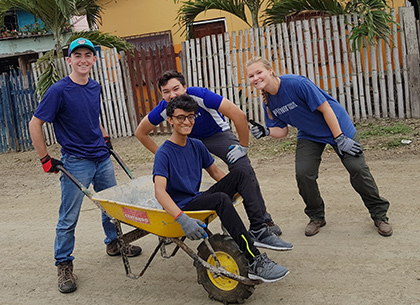
We had the chance to truly be immersed in the culture as we interacted with the local children on a daily basis. On one day we even got a live demonstration of how coffee is made, from the roasting of the beans(interestingly with sugar), grinding the beans in a traditional hand grinder to the brewing of the coffee! The local school also invited us for a few performances they had organised for ‘family day’. At the school we got to see a few traditional dances by the children, we got to hear them sing Spanish songs, and a few children even presented a few books they had made depicting their family. We even got to learn a bit of Spanish, as every day the people at the camp would write new Spanish words with English translations on the display board which we often read and used while waiting in the never ending line to get food. The kitchen staff made mouth-watering meals, including some local cuisine and catered to our vegetarian and non-vegetarian palate.
As for our accommodation, we had bunk beds with comfortable mattresses and blankets. The showers were quite challenging as we had to have buckets showers with cold water. Even though the water was freezing, it was extremely refreshing and energised us after our hard day of work.
Working with so many people taught us a lot about teamwork, communication, and tenacity. This work also taught us about the importance of working efficiently and effectively. At the end of our trip we had the opportunity to visit the sites for the last time and take photographs to cherish these memories forever. Our work was visible at the end of our trip but what gave us the greatest satisfaction was the party thrown for us on our last night at the camp to thanks us for our work. The truly heart-warming speech given to us by Mrs. Rodriguez, the cake baked by the locals, and the expressions of joy on the faces of the children made us showed us their gratitude for our work and made us feel like we had done a great job.
Participants: Anushka Basu, Aryan Jhaveri and Shawn Chauhan Deputy Leader: Manisha Nanda
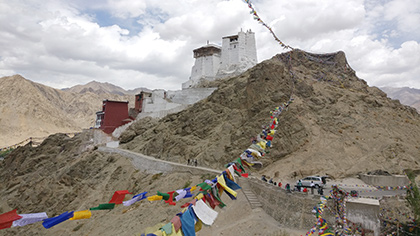
Perched amongst the deep northern frontier of the Indian subcontinent; rising amongst the towering snow-capped peaks of the Indian Himalaya lies Leh, Ladakh. With an ensemble of approximately 30 students from across the nation (along with one student from Kenya); all with an intrinsic flame burning within them, united under our common affinity for service we set our ambitions and actions towards contributing to the betterment of the region and the society. It was five of us fortunate delegates that had seized this opportunity to venture into one of the most revered and elevated regions in India. Encompassing far more than just our service to the Lamdon School at Thiksey; we were exposed to new social and cultural environments that would serve to only further develop our resilience, personas and knowledge.
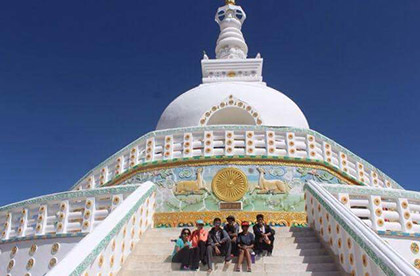
A literal transition from the humid and congested city of Bombay at the foot of the world standing at sea level; to a mighty 11,000ft at which the Ladakh lays pedimented upon would require a period of 48 hours for our bodies to acclimatise to the severely lower oxygen levels in the dry and barren cold desert. Though rearing to go and packed full of energy, it was only after an intense game of tag that we would fully comprehend why this period was one strictly reserved for rest! From the Shanti Stupa, we glanced upon the grandiose terrain that formed the “roof” of India. Though with approximately three hundred steps leading to this gleaming white pearl, harboured amongst the scorched mountains of the Himalayas; this “short walk” was one fuelled by water and social bonding amongst the group! As we walked toward the Leh Palace; a structure deeply intertwined and at the very cortex of Leh’s tumultuous past, we exposed ourselves to the Ladakhi terrain; scaling and traversing the ragged contour, through roads, hills and graveyards alike (this certainly made for quite an “unique” experience)! At the Leh Palace, we would virtually immerse ourselves into the history of Leh, learning about the rich history of compassionate religious philosophy of the region that still remains an integral part of the culture and guides the current day societal discourses.
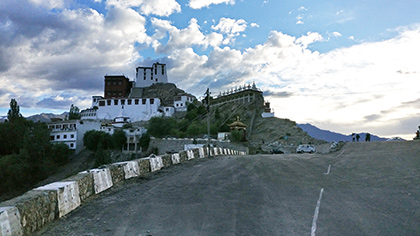
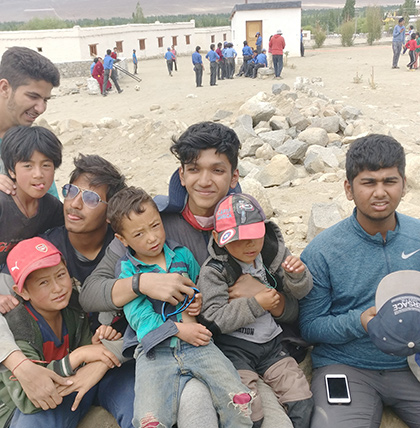
As our squadron rolled into the Lamdon School located at the base of the celebrated Thiksey Monastery that rose amongst the jagged cliffs which encircled it; our spirits remains highly invigorated! The reception at the Lamdon School truly touched our hearts; infectious smiles, laughs and charismatic songs from the students was something that will remain etched in our memories forever. We learnt of their hardship, determination and how the children walk several days from their villages to the school in order to attain education, something that many of us take for granted. Despite their hardships and meagre possessions; the children would not show or exhibit the slightest of problems; rather remain ecstatic and positive in the face of adversity with the most minimal of facilities and equipment. During our “domestic days” we would venture into their lives and gain insights on their perspectives about modern day affairs that remained nothing short of impressive. Captivated by their intrinsic drive to learn and assimilate knowledge; we learnt about their desires and passion. All of this would serve to further ignite our passion and desire to work towards a better future for their community; though we had gone there to give; we would come back richer ourselves. In the next couple of days, we would deeply submerge ourselves into rallying, stacking unloading bricks weighing upto eight kilograms to hoisting mud cement and finally transporting wooden “talu” from deeper in the surrounding towns. Though working with an inner drive and spurred by the fact that we could see the children in the evening; it seemed that our exhaustion was superseded by pure emotion. From learning Ladakhi dance, to revelling in the local games that they would teach us, and finally getting absolutely knocked out playing football with the children; our evenings were full of elemental bonding.
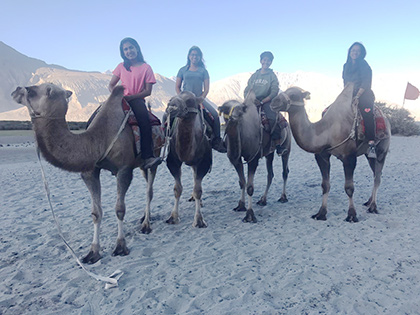
Connected without connections; as both a cohort and a community, we embellished bonds stronger than those that could ever be achieved by the likes of social media. Coordinating and exhibiting our best teamwork skills, we would push ourselves to the limit, both physically and mentally; something that was fuelled by the constant service of the domestics team and tragic jokes in the evening! For a large proportion of us that would include myself, the main source of drive and inspiration was something that we would attain from the innocence and simplicity of the cherubic children at the Lamdon school.
In my perspective, one of the most memorable moments of the trip would revolve around the children; with the evenings filled with their presence. We will savour the experiences with them; from trying to learn Ladakhi dance from the young girls to teaching the kids how to solve a Rubik’s Cube! We feel the learnings that we could infer from them are pivotal to our development; their resilience and determination in the face of adversity is something that definitely we would remember and act as source of inspiration in our difficult times. A few of us had ventured up to the Thiksey Monastery at roundabout 4:30 in the morning to stare in awe at the ethereal sunrise that rose from amongst the barren and robust mountains shrouding the monastery. With the unwavering rays of the sun surfacing from behind the jagged peaks shrouding the monastery; sunrises at Leh were unlike those that we’ve ever seen; entrancing and captivating. As a few of us ventured deeper into the monastery, we found ourselves at the prayer hall that witnesses to one of the most famed and celebrated rituals at the Thiksey monastery; where we were treated to butter tea served by adorable little monks in training! Their commitments and devotion to religion that was unwavering in the face of dozens of tourists was something that we think we would all find very commendable!
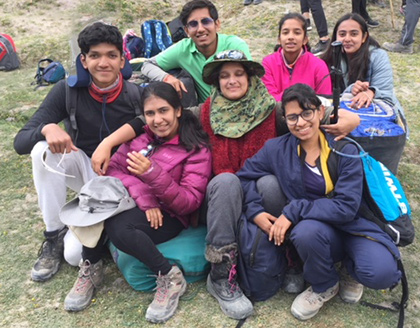
In these short seven days at the school we had fostered friendships ever so strong that on the day of our departure from the school, spirits were melancholy as we embraced hugs, tears and goodbyes and hopeful promises to remain connected forever.
Trekking through the Himalayan Outback was something that had long reined on my bucket list! As we began to set our paces and let heel fall in stride; the trek gave us yet another opportunity to communicate with our team and bond further. Encapsulated by the towering mountains across the valley; the trek was a time when we could temporarily leave our current lives, stress, pressures and just soak in our planet in every moment. One thing that was definitely very peculiar and interesting was the concept of a Ladakhi toilet; 6 feet holes in the ground with a tiny “toilet” definitely put our aim to the test! At the apex of our trek, would stand the Gandala Pass; as we scaled deeper into the valleys of the Himalayan Outback, shattering our lungs with the seemingly minimal levels of oxygen; the Gandala pass remains a minor feat of physicality but moreover an endeavour fuelled by the bonds we secured and fell back upon during the ascent.
Despite the perils of one of the most gruelling terrains of our planet; trees continue to flourish in the otherwise arid terrain; as ferocious and vehement winds strike them, they bend and adjust to their climatic conditions. It seems fitting that much like these very trees it would be our resilience, adaptability and perseverance that would give passage onto the top of the pass. This is an analogy that we think would resonate with practically every obstacle that we tackle in the face of adversity.
This period of time had been one that represented the assimilation of students driven under the common ambitions to create and contribute towards a greater cause, a greater society. We would leave the Lamdon School with something far greater than we had come with; something greater than ourselves; the pure and innocent happiness of the children that we could touch. They will remain in our prayers and hearts forever. As Mahatma Gandhi had once famously dictated; “the best way to find yourself is to lose yourself in the service of others.”, the relevance of this quote was once quite obscure; though now it’s something that all resonates within us.
Participants: Nainika Pansari, Srihaan Gangopadhay, Trisha Agarwal, Varun Shah, Ameesh Lodha, Accompanying adult: Ayesha Thomas
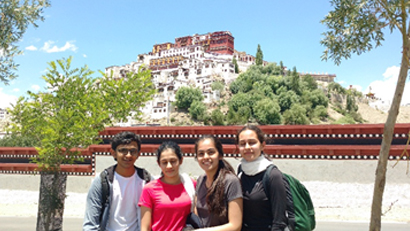
From the 25th of June to the 10th of July, the Scindia School. Gwalior hosted a Round Square service project in Lamdon School, in the village of Thiksey in the Leh District of the Ladakh region. Four students and a Teacher from Dhirubhai Ambani International School had the wondrous opportunity of attending this service project along with 29 other students from different schools from India and Germany. The project involved, building two classrooms for the underprivileged, trekking expeditions, cultural immersion, spiritual visits to monasteries, drives to mountains and lakes, teaching tasks, camping, sports and embracing the Ladakhi customs and culture.
The first two days were carefully and thoroughly devoted to acclimatisation and an introduction to Ladakh’s rich culture. The main service began when we reached the village of Thiksey on the 27th of June and all of us were hit by mixed emotions. Ladakh Residency, our hotel in Leh, was extremely luxurious compared to the jungle tents, Ladakhi toilets and bath areas built on tree barks. The campsite was a fifteen minute walk away from the Lamdon Model School where we were building the rooms. We worked for six hours daily in groups, mixing with students from other Schools. There was one domestic group taking turns to cater to the wellness of the exhausted group members after they returned from a tiring day of work. This was a great idea since it gave the staff a break and made the delegates more independent.
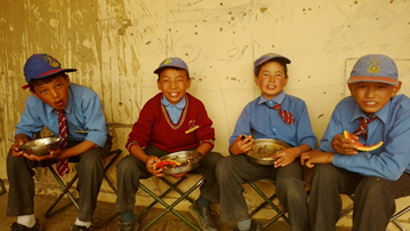
Work was extremely tough at first, carrying bricks and sacks of cement made our bodies sore until our muscles got used to the workload. The students worked in groups and took chances when it came to performing each task, and during our breaks at the work site we interacted with the children and played games like volleyball and badminton with them.
The highlight of the trip was definitely the visit to Pangong Lake and the six hour trek that we had to complete. Both the experiences made us appreciate nature’s beauty in the backdrop of barren landscape. The trek was a very good opportunity for the delegates as it helped them discover themselves and made them complete an expedition that seemed impossible. It awakened a feeling of pride amongst everyone and made them more confident about their abilities. These two outings gave the delegates a chance to take a break from the tedious work and socialise as a group, getting to know about Ladakh and exploring it’s beautiful culture. Another extremely auspicious moment was when the team got to meet his holiness, The Dalai Lama on the 6th of July, his 82nd Birthday. It was a private, interactive session where his holiness spoke to us about positivity, emotional hygiene and how it is extremely important to be happy and make others happy through compassion in the process. This affected the delegates in a spiritual way and made them grateful for all that they have.
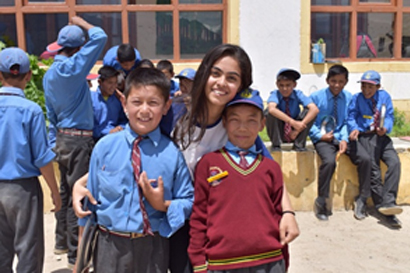
An extremely important part of this project were the interactions among the delegates. Students from 11 different schools from places like Germany, Lovedale, Indore, Chandigarh, Jaipur and Gwalior had ventured on this journey. The delegates got along very well and helped each other at all times. The aspect of immersing yourself into conversations with people from different cultures was extremely beneficial and that was an important learning experience from this project. We worked together as a team and built two rooms (a task that seemed impossible at the start) from scratch. We carried bricks and sacks of cement continuously, even through the continuous weather changes bringing in rain, sand storm, sun and the breeze. Some days there was scorching heat and other days it was raining heavily with a temperature of 13 degrees throughout the day. The ambition and hard work of each delegate and teacher was extremely remarkable and made this project successful. This project would have been impossible without the help of each teacher. They all contributed something different to the group and guided the students in the best way possible, In the end, we were left with memories for a lifetime. Whether it was interacting with the school kids and teaching them how to sing and dance or sitting in a large group and watching the sunset with a group of strangers that became a family at the end of the trip, each moment was extremely memorable. All the delegates left Ladakh with a sense of pride, accomplishment, satisfaction and gratefulness. It inspired us since we got to meet underprivileged students from the Lamdon Model School and got to know about how tough their lives are, but that doesn’t stop them from looking at the positive aspects of every situation. This journey changed each of the delegates by making them more confident and caring towards others’ needs.
Report by Riya Kishanchandani
Participants: Riva Kishanchandani
Ansh Kachalia
Lameeya Bandukwala
Nayantara Batra
Accompanied by: Nishant Nagavar
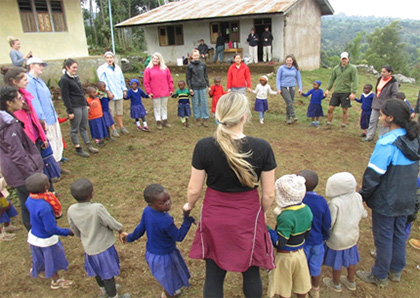
“Memory is a way of holding onto the things you love, the things you are, and the things you never want to lose.” - The Wonder Years
It can easily be said that this Round Square International Service Project in Tanzania was something we loved, something that made us who we are today and something we will always want to hold on to.
We departed from Bombay airport on the 10th of July, carrying backpacks brimming with meticulously packed clothes, shoes, and of course, food. We were unsure of what to expect from this trip, yet were full of excitement and anticipation. Not only were we spending two weeks in Tanzania building classrooms for local children, but we were also getting the opportunity to interact with 47 other students from across the globe.
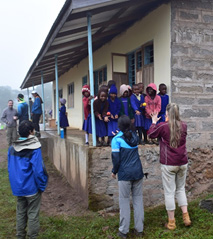
Out of a total of 12 days over there, we worked at the project worksite for 8 days. One day they took us for a safari, one day we went to see the local Chagga caves and a coffee museum, and one day we went to a school where we got to teach 4th, 5th and 6th grade students English, one-on-one. We taught them a few basic words, with Swahili translations. Once we were done with a set list, we were free to teach them whatever we liked for the remaining time. This teaching opportunity gave us the chance to help the children out with basic conversational skills and allowed us to bond with them. The fact that it was a one-on-one lesson also allowed us to closely focus on aspects like their pronunciation, and we were filled with pride when they said “Goodbye, see you later” to us as we left, in perfect English
The nearest town, by the name of Moshi, was a two hour drive away from our campsite. Our campsite was on the lawn of a children’s hospital in a village called Marangu. We stayed there in 8-person tents, with one common area for all meals. We used the hospital’s facilities; 4 toilets and 4 showers (2 for girls, 2 for boys). The showers had freezing water, so if we ever wanted to bathe with warm water we had to wait till afternoon. Every afternoon, our local helpers would heat up a large drum full of hot water from which we could take some out in a bucket to bathe with. Our food was very basic, but still delicious. We got rice, mashed potatoes, pasta, or some form of carbohydrates, along with a vegetable stew. Occasionally, when we were lucky, we would even get avocados.
It was a 20 minute trek to the worksite, which was not too challenging, and a good warm up for us before starting work. It was an incredibly scenic walk, through some forested areas and open spaces, where we got fantastic views of Mount Kilimanjaro. By the time we reached the worksite, we were energised and ready to start our work for the day. Our work included carrying bricks, mixing cement, cementing the bricks, carrying pails of water, painting walls, decorating walls, sanding and varnishing desks, carrying rocks, and shovelling gravel.
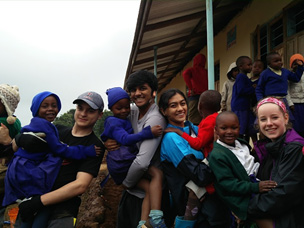
Some jobs were tedious, while some were relaxed, so every day we got a balanced mix of both. A lot of the jobs required teamwork, like carrying bricks, which helped us build our coordination. Each job presented a challenge of its own, whether in terms of strength or skill, which we worked hard to overcome. We worked from about 8:30 in the morning to 12:30 in the afternoon, stopping for a 15 minute tea break in the middle. Then we headed back for lunch after which some groups would return and work from 2-4 while others used the time to bathe and do some laundry.
Even though we worked at the site for only 8 days, we made a profound impact. Our impact was not only visible through the walls that rose above formerly empty grounds, but also through the gratitude in the children’s face. A workforce of 50 teenagers meant that at any given point in time, there was also someone available with the necessary skills for any task, be it drawing, painting, or even carrying excessively heavy sacks of cement. We sped through our work efficiently and enjoyably, managing to build an entire classroom there; a classroom that would a brighter future to so many children, in so many more generations to come.
The weather was surprisingly cold and damp. We had come expecting arid, scorching conditions, but instead faced gentles drizzles, and low degrees during our entire first week. We were overjoyed to see the sun out during our second week, because even though it meant it would be much hotter and tiring, at least it would be less depressing and the clothes we washed would finally dry!
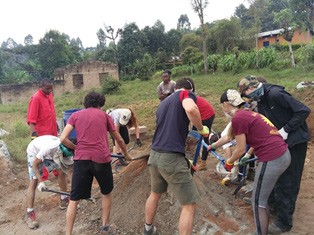
We were divided into 6 groups of 8-10 students each. Every day a new student was appointed as the Group Leader of their group. Their job was to make sure everyone had their work equipment, decide what job their group did that day, plan evening activities for the entire camp, oversee the work and make sure no one was unwell, and at the end of the day write a reflection about the entire day. We usually had plenty of leisure time in the evening, so even though the work at the site was extremely hectic and strenuous, we had enough time to relax and recuperate.
The trip wasn’t just a way for us to give back to the global community, but also a way for us to engage with a place a people who were foreign to us. Everyday took us a step further on journey of self discovery, and by the end of it we accomplished things which we never imagined we would be able to. What was amazing was the fact that we could see quantitative results of our work by the end of the trip. The (seemingly) endless walks carrying water and rocks, the tedious brick-laying, and the more physically friendly painting clearly translated to the real world wherein we could see the results. Apart from the physical (and more apparent) results, we were overfilled with a large number of qualitative results. We arrived at Kilimajaro as three students who didn’t know werent familiar with the place or the people in Tanzania. But we left Tanzania with a group of friends who we’ll never forget, and the memories of a people we will always remember.
Countless cups of hot chocolate and candid conversations later, I think it’s safe to say that we’ve emerged with a broader perspective of the world around us, and a greater appreciation for whatever we have
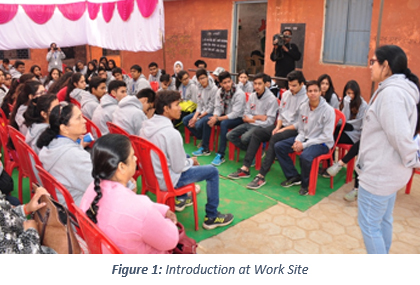
After the completion of the trip, none of the students had words to fully describe the poor living conditions and the harsh realities that they saw at the village of Nathon ka Pura. No one had words to fully describe the sorrow and pain in the eyes of each and every villager they interacted with in the village. There were no words to fully describe the hard-hitting realization that they experienced over the course of this service project about how privileged they really were. This holistic experience transformed them as individuals, creating a window for them to understand the larger world. Below, each day of the project has been described in a way that truly encompasses the transformational experience that the students gained as part of this service project.
Day 1 – 19th December 2016 On the first day of work at the site in Nathon ka Pura, the students had an introduction to the work to be done. Each of them were divided into groups to engage in all four of the activities at the village – toilet building, sewage channel building, women empowerment, and village survey. On Day 1, our school’s students were assigned to the women empowerment and the sewage channel building teams.
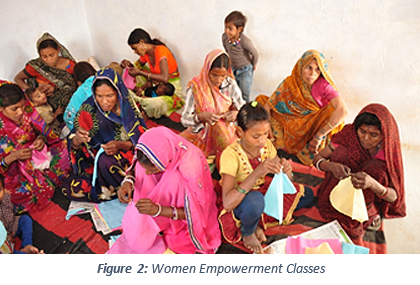
They were moved to see the sense of hope in the eyes of each and every girl participating in the women empowerment class – hope in the face of adversity, hope in the face of the banning of their sole profession of snake charming by the government, hope in the face of a patriarchal society. This very hope motivated the students to work with these village women to develop their skills in arts like weaving, tablecloth painting, handicraft making etc., to provide them a basic source of income. After the women empowerment session, they participated in the sewage channel building project. This was an extremely exhausting and physically challenging task, as it involved laboriously carrying heavy buckets of cement and heavy bricks up a steep slope to help build the channel.
In order to ease the process and maximize efficiency, the students decided to use a human chain to transport the bricks and the cement up the slope. This task forced them to work outside their comfort zone, as they were not used to such physically challenging work in their daily life. After continuing the transportation of cement and bricks for the next 2 hours, they ended the day’s work and returned back to the Scindia School to rest, after a tiring day.
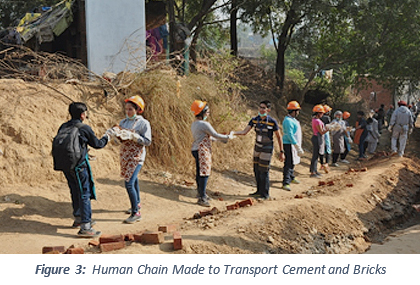
Day 2 – 20th December 2016 On the second day, the students continued the transportation of bricks, after 200 new bricks were delivered to the village. Over a total of 5 hours, they laboriously transported over 150 bricks up a steep slope for a distance of around 300 meters. This task was very physically challenging, especially because the distance to be covered by the human chain was longer and the number of people part of the human chain was lesser (as some people were assigned other duties on the second day). This led to a very tiring 5 hours, as each individual in the human chain had to walk 4 meters, carrying heavy cement and bricks, to reach the next person in the chain.
This inevitably slowed the students down, but they continued to work with grit and determination to transport as many bricks as they could, up the slope. On this day, they also distributed food to all children in the village, who were hungry for several days at a stretch due to poverty and the shortage of food in the region. The distribution of food was a real eye-opener, evident by the expression on the face of each and every young hungry child who was served hot piping food by members of the Round Square project.
Accompanied by: Nishant Nagavar
After the transportation of all bricks, they ended the day’s work and returned back to Scindia School. Later in the evening, they had the opportunity to attend a light and sound show in the Gwalior Fort, which gave them deep insights into the culture of that region. Thus, this Round Square project not only allowed them to serve underprivileged people but also provided a cultural window to better understand a new culture and historical background in specific, and the world at large.
Day 3 – 21st December 2016 On the third day, all 5 students were assigned to the village survey team, and hence they, along with a group of 10 other students, went around the village to survey 10 households. This survey was a truly moving experience. They met villagers who hadn’t had food for several days at a stretch. They met villagers who had given birth to children who all died before the age of 5.
They met villagers who had an uncertain source of income. Apart from this, they also met an 18-year-old girl who had been married off at the age of 13, and had given birth to 2 children, both of whom died at the age of 2 months. They met a young girl with mosquitoes flying all around her, because she hadn’t had a bath for months. This was the hard-hitting reality that the students were exposed to during the village survey, which served as a powerful eye-opener. After the village survey ended, they returned back to Gwalior city and visited the Gwalior museum, which again served a cultural window for them to understand a culture previously unknown to them. The day ended with an “IDEALS” session, that described the ideals of the Round Square foundation and how each of the ideals was implemented in this service project.
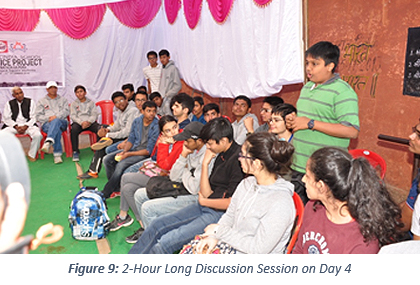
This was an extremely thought-provoking and interesting discussion as the students discussed how the 6 ideals (Internationalism, Democracy, Environment, Adventure, Leadership and Service) were interrelated, and the role each of them played in furthering the Round Square Mission Statement. The day ended with a grand presidential dinner that included a delicious Indian cuisine buffet.
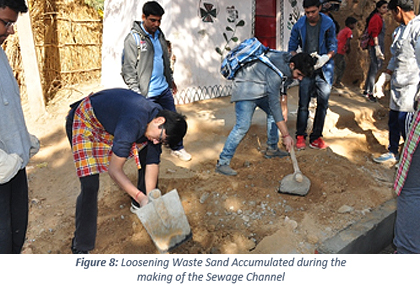
Day 4 – 22nd December 2016 On the fourth day of the service project, the students basically started to wind up all the work done in the previous day. This basically included breaking up any piles of waste created during the making of the sewage channel, and transporting this waste to a nearby dumping spot. This was extremely tedious especially because the waste sand had stuck together, making it difficult to remove.
To ease the process, they engaged in division of labour – each team of 10 people were assigned to clear up the waste for a 100-meter length. Of the 10 people, 1 person was engaged in actively loosening the sand, 1 person was engaged in filling up large tubs with the loosened sand, 1 person was in charge of picking up filled tubs, 6 people were in charge of forming a human chain to transport the filled tubs to the dumping spot and 1 person was in charge of bringing back the empty tubs to be filled again.
This division of labour made it easier and faster to complete the work, leading to all the waste being cleared off within 3 hours. The work day was fairly short, as they finished the day’s work by noon, and then engaged in a 2-hour long discussion session where they talked about their learnings from this Round Square service project and its applicability in daily life. During this session, the students also made news articles and brochures to summarize all the work done as part of the project.After they returned back to the Scindia School, they had a fun ‘Chaat Party’ in order to end the service project on a happy note.
Participants:
Navya Mehta, Year 11
Nisha Srivastava, Year 11
Rajeshwari Jadhav, Year 11
Palash Goiporia, Year 11
Chirag Nanda, Year 11
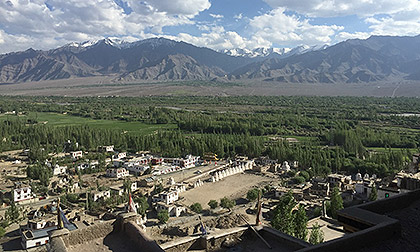
From 13th to the 28th of June, the Scindia School hosted a Regional Round Square Service Project in Thiksey’s Lamdon School in Ladakh. Around 20 children were selected from schools dedicated to the Round Square ideals and committed to bring greater social change to the community. Three of us were given the opportunity to venture into the lap of the Himalayan Mountains wherein we immersed ourselves in not only humanitarian service, but also Ladakh’s rich cultural history.
For the first three days, the priority was to acclimatise ourselves to Ladakh’s altitude and climate. This gave us a splendid opportunity to visit the Leh markets and the Shanti Stupa, a famous monument which is renowned for its religious significance and panoramic views of the city. Additionally, a pastor in Leh’s Moravian Church enlightened us about the rich Ladakhi history. We were deeply fascinated by how the religious fabric of the region was closely intertwined with Ladakh’s past. The peaceful coexistence between various contrasting religions, such as Shia and Sunni Islam, was nothing short of impressive.
We reached the Lamdon School with great excitement, freshly rejuvenated by our stay in Leh. For the next week, it was our task to build rooms for the students of the school. We began our work with great vigour. Loading and unloading bricks, creating the cement, and carrying logs for roofing, we were soon working rapidly. Despite initial confusion, we became a welloiled machine, united by our common goal of service for a greater cause. Our exhaustion was quite evident in the afternoon ritual of group back massages! After toiling the whole day, nights were dedicated to reflection and enter tainment provided by the domestics team.
The absence of internet in the village meant that we all relied on traditional games such as football and cricket r a t h e r t h a n s o c i a l me d i a f o r entertainment. We realised that these games forged a stronger and faster bond between us than Facebook or Instagram ever could. Furthermore, the lack of technology didn't even affect the experience. We learnt to be independent of our phones as we engrossed ourselves in our work and appraised nature instead. One of the most memorable experience was during our field trip to Pangong Lake, where we were given the opportunity to marvel at the picturesque views of the mountain ranges and the pristine waters of the lake, sights nonexistent in our concrete jungles. Furthermore, exposure to Buddhism via the visit to Thiksey gompa (monastery) gave a captivating understanding of Buddhist traditions and lifestyle.
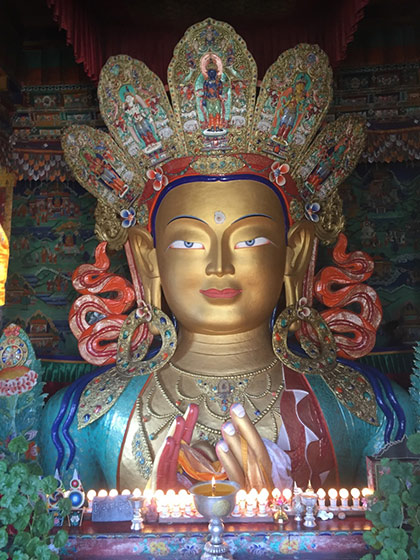
Playing, teaching and interacting with the children in the Lamdon school during our free time and ‘domestic work’ days gave us a greater insight into their lives. We all were quite impressed by their desire to learn and their enthusiasm and cordial personality was commendable. However, their ambitions were hindered by the deprivation of trivial resources. This inspired us to work with a greater drive and truly help these children fulfil their dreams. Seeing them smile, laugh and call our names affectionately resulted in us building the dorms at a greater pace than expected, giving us all a feeling of accomplishment. Moreover, the costumes, dances and songs of the final performance was magnificent and it was a privilege to join in their celebration. Signing books and sharing numbers with the children on the last day was a tearful experience as both parties were hesitant is saying farewell.
Due to health issues, I was unable to accompany the group for the Trek phase and stayed back in Leh. Nevertheless, these days didn’t turn out to be futile and I didn’t squander my opportunity to explore Leh to a greater extent. A visit to the Army’s Hall of Fame augmented my feeling of patriotism as I was exposed to the harsh lives of our country’s defenders. The 17th Century Leh Palace astounded me with its remarkable architecture and I was impressed by the traditional handicrafts sold in the famous Leh market.
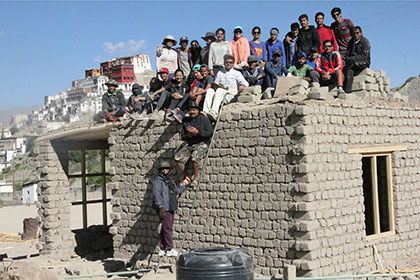
In these two weeks, students aspiring for a better world, were given the chance to gather and work together to achieve this very goal. Collaboratively, we managed to build two rooms for the children of the Lamdon school and were rewarded with the most satisfying gift—their smiles. This service trip in Ladakh had not only enabled us to serve a greater purpose, but has also helped us develop a better understanding of society, and more importantly, ourselves.
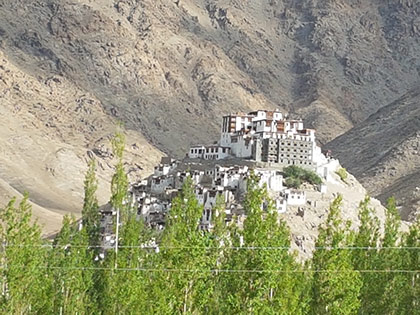
Somewhere at the end of April, I received an email from school telling me about a Round Square program that would involve three students from our school, along with a bunch of students from other schools. It was a trip to Ladakh. It was also one of the best things that has happened to me in a long time.
I’d want to establish, first of all, that Ladakh is beautiful beyond imagination. The spectacular view bowled me over even as I entered into Leh, the capital city, through the airport. No other airport in the world is surrounded by mountains- some brown, some covered by white crystalline glaciers. No other land on earth has a sky so filled with stars that one finds oneself confused as to which way to look. Nowhere else can you stand in a shopping centre, and look around, and lose yourself in the aroma of colors- the amalgamation of green, azure, blue, yellow, purple, maroon. Ladakh is unique
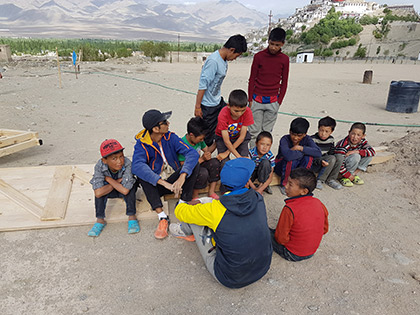
Over the course of 10 days, we got to know the schoolchildren of Lamdon High School in and out- Little Stanzin with his gestures of homicidal behavior towards Arya, Sonam with presents of trinkets and bracelets, and Jigmet with just all-round cuteness. We found ourselves wanting to help these children, and what better way to do so than building dorms for them, so more children like them can educate themselves and propel themselves towards a better future. The work of loading bricks, and making chains to transport cement may have been tough, but with this end goal in mind, we were determined enough to plough through and finish ahead of time.
The 3-day trek and the end of the trip, with its seemingly never ending paths through gorgeous valleys and mountain-tops, was an earth-shattering display of the true essence of Ladakh. We saw yaks, bulls, rivers, streams, plants, tents, toilets (holes in the ground) and much more.
I keep talking about what I found in Ladakh. But over the course of this trip, I found so much more in me. I’ve learnt of my friends’ deepest, innermost secrets and insecurities. And I love them all the more for it, because I understand what they’re going through. The desire to stick by a friend through it all, no matter what. I realized that I had this desire. The friends I made here will stay with me throughout my life. Especially my friendship with myself and the person I am. This trip has taught me so much about life, and I’d recommend this trip for future students from our school. The experience is out of this world. - Pranav Vaidyanathan
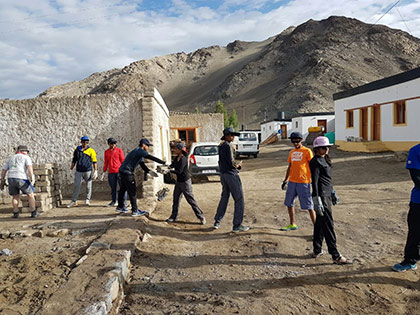
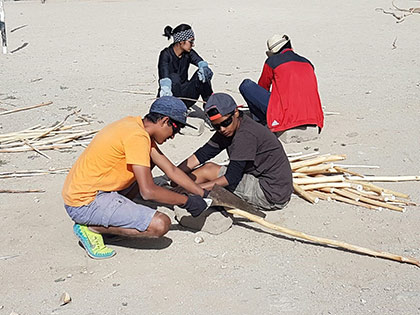
There’s no point in taking up a challenge if you aren’t willing to push yourself till the very end. That’s something I’ve learnt every step of the way in the 2 weeks I spent in Ladakh, surrounded by the lofty and seemingly unscalable peaks of the mighty Himalayas. This trip was definitely one of the most exciting experiences in my entire life. Our first day itself involved climbing 500 steps to the Shanti Stupa and walking across to a monastery, which seemed like a Herculean effort at the time. But the work at Lamdon Model School, Thiksey was to be even more so. The main purpose of this service project was to build one room of the dormitory for the boarders at this school, who take days to come walking from places that are really far away. Our group of 22 appeared to be a highly motivated bunch right from the start, and over the course of time, we worked tirelessly, and made sure we surpassed all expectations. We started off with loading bricks weighing about 8kgs on to tractors, and moved on to stacking them, laying them, mixing cement, and even sawing logs.
At first I was apprehensive about sawing logs and passing heavy cement bowls on to the roof, but technique, patience and lots of teamwork, were key and in the end it turned out just fine in the end and I was a bit disappointed that we finished so soon! In the end completed not only one, but two rooms of the dormitory, which was essentially double of what our target was, and everyone was really proud of themselves. We spent our rest hours with the children in the hostel.
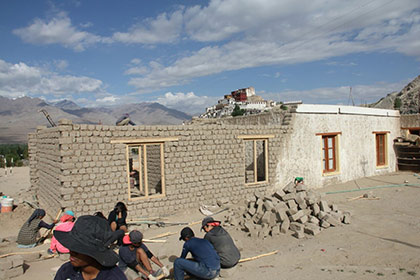
I really enjoyed playing football with them, by the end of our stay I could survive a whole match without tiring out, something I never thought I could do at this altitude! Since we were divided into 4 groups, each group got 2 days for “Domestics” which meant cleaning up the dorm, teaching school kids, and planning the evening’s entertainment. I really loved teaching the Grade 6 students at the school, we bonded quickly and by the end of it I could count from 1-20 in Ladakhi! We also had some exposure to Ladakhi culture through some Performances the students of the school put up for us. On the last day of our stay we both were sad to part ways and they kept asking if I could stay longer.
Doing my own laundry and bathing with ice cold water, living in bare accommodation was also a different experience. The little things we did, such as crack jokes at the table, sing and work, play innumerable games of Uno, drink hot chocolate all day were what brought everyone so close together. Even the visit to the gorgeous Pangong Lake mid-work, with its crystal clear, ice cold waters, allowed everyone to bond. Perhaps that’s what made the trek so great as well. It was a really strenuous, arduous and mind numbing trek, honestly, through the depths of Hemis National Park. And when I thought it couldn’t get any tougher, I found myself having scaled a height of 5000m above sea level.
The terrain was insane valleys, ledges, streams, rocks, steep climbs and slippery slopes, I had never pushed myself this much ever before, both physically and mentally, and I was determined not to give up to the very end. By the end of those 3 days, we were so fit that we ran the last 2 hours of the trek, through the river valley and along the river.
It was the most refreshing experience ever, with the cold wind and clear air all around. Our last day was spent in the market, shopping, eating and relaxing. Everyone was really sad to bid each other farewell when we touched down in Delhi, but we made a lifetime of memories with strangers who became family. - Teesta Rawal, Y12
Project Overview
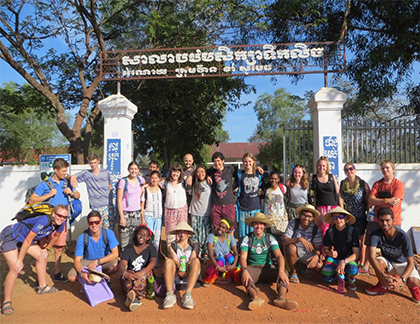
Our Round Square International Service Project in Cambodia was a very successful and culturally enriching experience. Our powerhouse team of 24 consisted of 3 adult leaders and 21 students from 19 Round Square Schools around the world. The project work was divided between two villages where we lived and worked for the duration of the trip. Our first, Beng Pae in the Kampong Thom province and second at Beng Mealea situated just outside Siem Reap.
Team List Students and staff came from Round Square schools in Australia, Canada, Columbia, England, Germany, India, Kenya, Peru and South Africa. The students were:
| Santiago Concha | Anglo Colombiano, Columbia |
| Linda Kamau | Brookhouse School, Kenya |
| Lydia Hemson | Bunbury Cathedral Grammar School, Australia |
| Alex Lee | Ballarat Grammar, Australia |
| Marisha Agarwal | Dhirubhai Ambani International School, India |
| Finn Wiesner | Louisenlund, Germany |
| Carl Illies | Louisenlund, Germany |
| Nasir Khan | Mayo College, India |
| Shreyan Goyal | Mayo College, India |
| Jordan Gambirazio | Markham College, Peru |
| Virgil Sum | Markham College, Peru |
| Sarah Ross | St Clements School, Canada |
| Emilie Morin | St Clements School, Canada |
| Ella de Nicola | St Cyprian’s School, South Africa |
| Jerome Brutus | St Georges Grammar School, South Africa |
| Lachlan Saunders | St Philips College, Australia |
| Nathan Kirby | St Philips College, Australia |
| Arjun Singh | Daly College, India |
| Louis Sloper | Trinity Anglican School, Australia |
| Hannah Sanders | Westminster School, Australia |
| Gemma Trueman | Westminster School, Australia |
| Sonia Christian (Project Leader) | Dainfern College, South Africa |
| Huw Jones (Deputy Leader) | Inter Community School, Switzerland |
| Vicki Hutchinson (Adult Leader) | St Philips College, Australia |
| Bunlay Tong (Country Manager for Camps International) | Cambodia |
| Sunny (Local Assistant) | Cambodia |
| Han (Local Assistant) | Cambodia |
| Sofan (Local Assistant) | Cambodia |
In association with Camps International, our Round Square group was set for a successful project. The team worked alongside Cambodian local workers, and were given clear direction and instructions throughout the project.
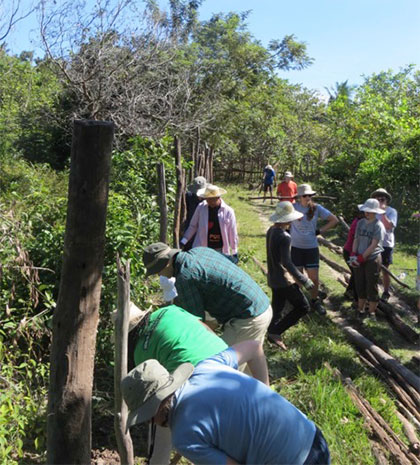
At the first school in Beng Pae, our jobs varied from building a boundary fence for the school, to laying a pipe to the ablution block and painting the front wall of the school.
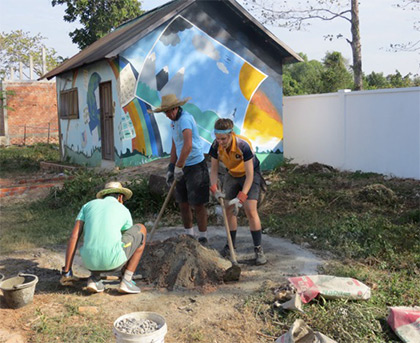
At Beng Mealea we were involved at the local community centre building a bench and with the completion of the outside wall. In the school grounds we paved a brick pathway for the children to walk on and make it easier to get around. The group learnt a number of different working skills and life lessons on the worksite and the main tasks included painting, digging, carrying materials, mixing cement, bricklaying, rendering, building cement pathways and reinforcing the local dam wall.
The groups work rate and attitude on the work site is to be recognised and applauded.
Additional project In addition to our work at the school sites, the group contributed to the Jungle Garden at the Beng Mealea camp. The focus of the garden was to plant and nurture various medicinal and tree species for the future generations.
Our local project leader Han was exceptionally passionate about the development of the garden and the group were more than happy to assist him in making his dream garden a reality.
The group assisted in digging, weeding, planting and watering the plants. He also gave the group some lessons on organic farming and the challenges presented by the Cambodian climate.
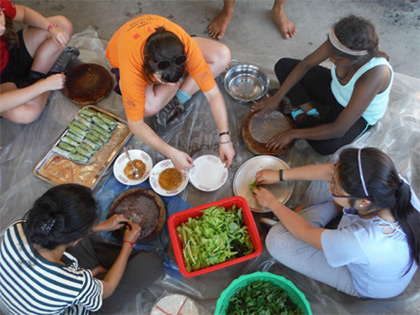
Every member of our team also had time to experience some of the delicious Khmer cuisine and assisted every day with preparation of meals in the kitchen with the camp kitchen staff.
The group also thoroughly enjoyed their many hours spent entertaining and interacting with the local school-‐goers, playing sports, braiding hair and making traditional Khmer bracelets!
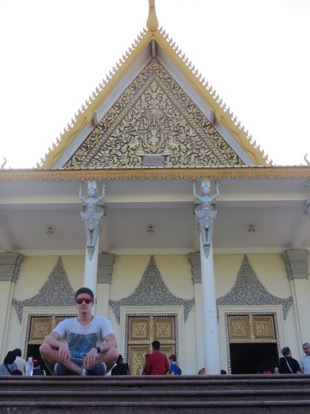
The group had a jam-‐packed itinerary filled with various local and cultural experiences integrated into our daily schedule. It was wonderful to see the group engage in these opportunities and grow personally as they learnt more about Cambodia’s history and the Khmer people.
While in Phnom Penh, the group visited the gruelling Killing Fields, S21 Genocide Museum, The Golden Palace and spent time enhancing their bargaining skills in the Russian Market!
When we reached Siem Reap later on the in project, the group enjoyed a boat trip around the floating villages and more shopping in the markets, discovering temples and attending an amazing Cambodian Circus evening.
Our three day mid-‐project hike was through the beautiful Phnom Kulen National Park. We hiked through rice fields and jungle; slept in hammocks, were given cold water lessings by the local monks, and explored the hidden temples and bat caves. On the hike down on the last day we stopped at an incredible waterfall for a refreshing swim and were amazed at the incredible power of the water. This was an amazing experience which will remain with us forever.
For our final days as a group, we spent three wonderful days in the city of Siem Reap. This is in the most prosperous region of Cambodia and gateway to the heritage site of Angkor Wat. On Christmas morning we rose very early to enter the Angkor Wat site to witness a spectacular sunrise over the five towers of the country’s most famous landmark. The entire day was spent exploring many of the temples in the area and marvelling at the architectural magnificence of these ancient structures.
The overall feedback from the students was hugely positive with a great deal of important life lessons learnt, opportunities to experience Cambodian culture, and strong friendships made along the way.
As a group, we made so many beautiful memories in our time together and grew as a family each and every day as we shared such special times together.
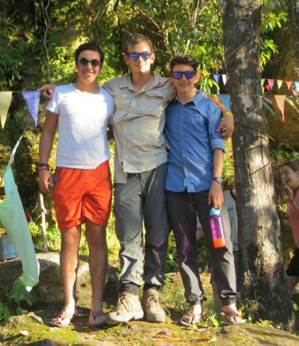
Student comments and life motto’s
“A great learning experience. One that I will never forget”
On the final day, as we took the students out to the airport for their departing flights you could see the realisation dawning on their faces – a growing understanding of the significance of what they had achieved, seen and experienced. They worked so hard on the building site, constantly on their feet and submerged in the culture, so it was only at the end with a sense of finality that they could take stock of the Project.
They will always have the memory of this trip with them, a time where they formed new friendships from people around the globe and gave their all to help a community.
Making a difference in other peoples’ lives was no longer an idea or concept for the students, but something real and possible. Hopefully they will continue to strive to do their best in their future endeavours.
“I cannot express my gratitude enough for this trip. I have gained and benefited so much from giving back, learning about Khmer culture, and meeting some of the most amazing people I have ever met, including the students and Khmer people. I will continue to give back and try to make a difference not only locally but globally. I am not afraid to be who I am and as cliché as it may sound I have found my purpose and it is to create reach-‐out programs like these in order to provide people less fortunate than myself with some of the opportunities I have been given such as education and a home”.
“Best experience of my life! An unforgettable 3 weeks with lots of excitement. I can only recommend it – better than I could have ever expected!” (student)
“I will never forget the children of the locals and the maturity of the school children. I feel like they put a lot into perspective for me in my life, and I learnt and grew a great deal in myself”. (student)
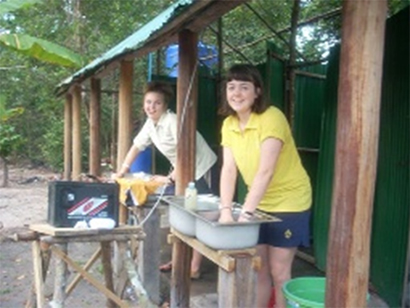
Project Leader: Sonia Christian, Dainfern College | Deputy Project Leader: Huw Jones, Inter Community School | Accompanying Adult: Vicki Hutchinson, St. Philips College | Country Manager: Bunlay | Camp Manager: Han
STUDENT PARTICIPANTS
Santiago Concha, Anglo Columbiano
Nathan Kirkby, St. Philips College
Lydia Hemson, Bunbury Cathedral Grammar School
Lachlan Saunders, St. Philips College
Marisha Agarwal, Dhirubhai Ambani International School
Virgil Sum, Markham College
Ella De Nicola, St. Cyprian’s School
Alex Lee, Ballarat Grammar
Finn Wiesner, Stiftung Louisenlund
Hannah Sanders, Westminster School
Carl Illies, Stiftung Louisenlund
Sarah Ross, St. Clements School
Jerome Brutus, St. Georges Grammar School
Emilie Anne Cavers Morin, St, Clements School
Linda Kamau, Brookhouse School
Louis Sloper, Trinity Anglican School
Nasir Khan, Mayo College
Arjun Singh, Daly College
Shreyan Goyal, Mayo College
I reached Chhatrapati Shivaji International Airport 3 hours early so as to explore Terminal 2 which is said to be iconic. There was a lot of hugging and crying and phone calls to friends and family before going into the airport. I went to check-in where they put me on stand by for being a minor un-accompanied traveller. While I was waiting, I took time to explore the airport which was all glass and glittery and screams fancy. The ceilings and floors were so intricately crafted. After I was cleared, I went to security and then immigration. I prepared a mini-speech for immigration but no questions were asked. After that, I checked my boarding gate on the screen and then explored the shops at the airport.
I then went to my boarding gate which was one level under me which was a very confusing path. I bought coffee for myself and then boarded the flight. After landing in Suvarnabhoomi Airport, I had to follow the signs to the transfer counter where I had to go through security once more. Since I had a 5-hour layover, I first had breakfast at Burger King and then walked till gate F of the airport, exploring the shops. I then boarded my flight to Phnom Penh which was a 55-minute journey. The flight was pretty empty. I landed at the airport where I had to fill a few forms, go through immigration, collect my baggage and I met with Sonia who was holding up a Round Square sign.
We then sat at a nearby coffee shop where we waited for the others. Apparently, one group had already arrived and we were the second slot. Jordan and Virgil were the next to come. I spoke to them and then Ella came. While Ella and Jordan were talking, Virgil and I went with the Round Square sign to pick up Finn and Carl. We then took a bus to the hotel. I was roomed with Ella as I had already chatted with her on Facebook before the trip.
At the hotel, we went to our rooms and then met everyone at dinner. We went out to a restaurant where our budget was $6 and if we ordered drinks then, we had to pay for them. We did a lot of talking at the table. We then went to sleep.
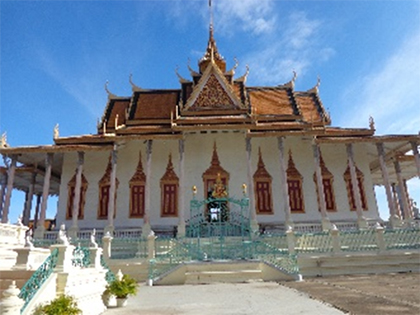
Dec 7 – Dec 8: ORIENTATION AT PHNOM PENH Over these two days, we toured the capital city of Cambodia – Phnom Penh. We went to the killing fields on an audio guide and to Toul Seng to learn about the history of Cambodia which was very disturbing. We were lucky to meet with a survivor of the Khmer Rouge. We also visited the Royal Palace and went to the market for shopping where I bought my Christmas outfit.
I made many more friends over these two days and even became close to the other 3 Indian students who were on the trip – Arjun (who I knew before the trip), Nasir and Shreyan. We also had a pool at the hotel, so we went for swims at the pool. The view from the terrace was spectacular.
Dec 9 – 13: WORK PHASE AT CAMP BENG PAE
We got on a bus to Camp Beng Pae which was a 4-hour long journey. We sang, slept and chatted on the bus. The camp was in a village. We stayed in dorms and had a compost toilet. There were 5 showers which had ice-cold water. We also had a chance to cook in the kitchen and we could also wash our clothes. We were also split into three dish-washing groups. Our group was #Group 1 – Santiago, Linda, Lydia, Emilie, Nathan, Shreyan and Me. We had to clean up after dinner.
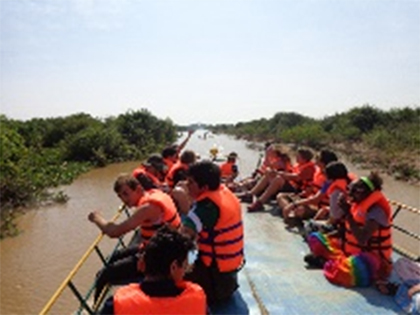
It was a lot of fun cleaning up because of Santiago’s singing, Nathan’s voice overs and Shreyan’s inspections. The camp site was the school which was a 15-minute walk from the camp. We received flowers from the children whenever we would come back from working. It was very touching. At the school, we built a fence, set up a drainage system and re-painted the walls.
It was hard work digging holes, transporting the heavy logs, fixing pipes, sanding and painting the walls. I ended up ripping my gloves at the end of the work phase. Every day, we would work in two shifts – morning and post-lunch. It was too hot to work in the afternoon. That was our rest time where we would take showers and talk to everyone.
After the second shift, the children would come back to the school where we would play with them. The guys would play football while we girls would play other games with the kids. We even learnt a few games from the kids which was a lot of fun too.
On one of the days we went to the bridge which needed restoration as it gets eroded every monsoon. That was draining as we were working under the blistering hot sun. I was really happy when all the work was done. It was very satisfying and made me feel very good when the school’s principal came to thank us. We also gave the kids toys and stationery and their smiles really touched me.
On the last day at camp, we had a bonfire and all the kids came to say bye to all of us. We learnt the traditional Khmer dance steps and we were dancing around the fire. I went with a few of my friends to go star gazing. There is a path to an open clearing where we sat down and enjoyed the stars. We even saw a few shooting stars.
Dec 12: TRANFER TO CAMP BENG MEALEA We took a bus and went to Camp Beng Mealea. We only spent one night there as we were going to hike to the top of Kulen Mountain from there. This camp was on the highway and was slightly bigger than the previous camp. Here, the dorms were bigger and there were 8 showers – 4 for the boys, and 4 for the girls. There were 8 compost toilets too and there were basins and a concrete kitchen. We walked to the school which was also a 15-minute walk from the camp. We were briefed as to what our task was. We then went back to the camp, played UNO, had dinner and went to sleep. We had to pack our trekking bags and lock our bigger bags which were going to the Siem Reap hotel.
Dec 13 – Dec 15: MID-PROJECT HIKE & HOTEL STAY We started our hike from Camp Beng Mealea. We trekked through long grass, the community forest, and steep rocks all the way to the top of the mountain where we spent the night at the monastery. We pitched tents and hammocks under a monk’s house. We played games and chatted till it was time to sleep. The next day, we trekked through the forest on a flat path to another monastery – Wat Phreah Kral. We rested for a while after lunch and then went on a mini-trek to see the bat caves and the elephant pond – Srah Damrej. Alex (my best friend) and I were leaders for that day.
Each day, the leaders would elect two students to be leaders for the day who would be told the day’s plan and we would have to answer any questions the group has about the day. We also had to wake up ½ hour earlier to make sure all the equipment was there for the day. We stayed inside the Buddhist temple this time.
We played team-games which was a lot of fun in our dish-washing groups. Our group and Group 3 were tied, so group 2 had to give 2 points to either group, and they gave it to the other group, although we were the better and faster team. We played games like 20 items, 2 truths 1 lie and the best Royal D advertisement (local electrolyte company).
We watched sunrise and sunset and it was very beautiful, atop mount Kulen. The next day, we trekked back downhill to catch the bus to the hotel. Before leaving, we received a cold-water blessing from the monk. On the way back down, we had lunch by the river of a thousand Linga’s. After lunch, we went to the base of the waterfall for a swim. We then trekked down through the forest and then several steps to the bus. We then went to the hotel where we switched roommates for the third time. I was finally roomed with Alex. The plan was to stay one night at the hotel and then drive back to the camp. Instead, we stayed at the hotel for two nights. We went to the night market where I did a little bit of shopping and had a non-rice dinner which was very tasty.
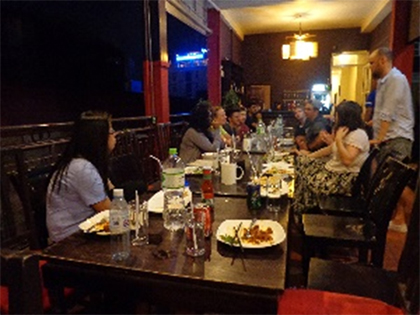
This hotel was much bigger than the previous one. Our room had a balcony too. The hotel had computers so the line was very long to check our mails and Facebook. The next day, we went to the silk farm and to the market again. We also went to an acrobatic circus which was very cool. The next day we were driving back to camp. We stopped at the war museum where our tour guide was a victim of the Khmer Rouge who had been injured very badly. We saw all the machines and artillery at the museum. We then had ice cream from a vendor near the museum and then went back to camp. We stopped at a restaurant for lunch. There was a stall where spiders, crickets and cockroaches were being sold. Some people did eat them and their reactions were priceless.
Dec 17 – Dec 23 WORK PHASE AT CAMP BENG MEALEA After reaching the camp, we were given an hour to unpack and freshen up. We were then split up into two groups to work in the jungle garden. In my group, we were clearing up the forest while the other group was digging pits. In the evening, both groups were very productive. We all then played volleyball. After that we all raced for the showers.
We rotated our dishwashing groups, so now our group would clean up after breakfast. I also got a chance to roast chicken with Vicki which was a very nice experience. We had dinner and then played games like UNO, Wolf in the Village and we even picked out our chits for the Mystery Murder game.
It was really funny to see how everyone tried to stay in big groups so as to avoid being killed. I died pretty early in the game. The next day we got back to our dishwashing groups to work at the Community Centre, School and Jungle Garden. The teams swapped worksites so everyone would have a chance to do all aspects of the project work. This continued for the next couple days.
Each day, two people would move one to one group, so finally at the end, we were all back in our original groups. At the community centre, we had to build and plaster the walls. We also had to paint the exteriors and build a seating arrangement. At the jungle garden, we had to do weeding and plant trees and plants for the locals to extract their medicines and food.
At the school we had to plaster the walls of the teacher accommodation and build the path to the library, toilet and teacher accommodation. We also had to install the drainage system in the school.
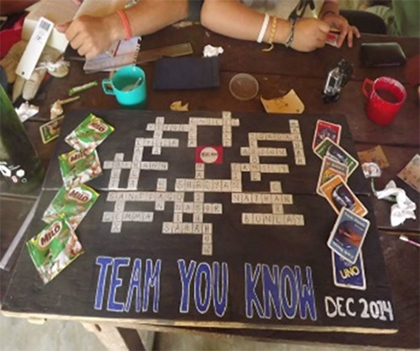
Here, the kids were much older and we would work till it would get dark, so we didn’t spend much time with the kids. Instead, we would play on the monkey bars with our groups and it was a lot of fun, although very childish. Sonia’s birthday was on the 18th so we planned a surprise for her. We contacted Bunlay who arranged a cake for her from Siem Reap and it was a really good cake.
We also decorated the camp area and had sparklers and silly string. She was almost in tears! At the second camp, I became an expert at mixing cement with my partner Nathan. I also learnt how to use hoes and spades and the elephant foot which we named George. Louis, Ella and I had to go to the hospital mid-project but we came back the next day. Sunday was our off-day where we visited an old Hindu temple which was spectacular as it was destroyed by nature. On our way back to the camp, we gate-crashed 2 Cambodian wedding which was very nice.
Dec 24 – Dec 27 TRANSFER TO SIEM REAP HOTEL & BACK TO INDIA We worked till lunch in the jungle garden, nailed our plaque on the wall, higher than the others and then went to the pagoda near the camp where we received a cold water blessing before hopping onto the bus to Siem Reap which was a 1 ½ hour journey.
On the way to the hotel, we went to the floating village for sunset. We went on a ferry and then Arjun, Jordan, Nathan and I (we four always stuck together) went up on the deck with our life jackets for a better view of the floating village. It was very nice as we even got to see crocodiles and snakes at the souvenir shop.
We then took rest at the hotel. After unpacking and freshening up Sonia gave us all our phones back for Christmas. I actually forgot what my phone looked like and I think I was the most happiest to get my phone. But then I was sad as I had 1000+ messages on WhatsApp which was quite annoying to go through.
We then got onto the bus to Angkor Wat for sunrise where we had to trek up a hill for 40 minutes, but it was worth it. We bought coconuts after coming down and then went back to the hotel.
We then had 5 minutes to freshen up at the hotel and get back on the bus for Christmas Eve dinner. This dinner was also non-rice and it was candle-lit which made it very hot yet very beautiful at the same time.
I spent the whole night chatting with Alex. The next day was Christmas day. I woke up to Alex’s alarm playing a Christmas carol. We had to be out at 4:30 in the morning to catch sunrise at Angkor Wat.
It was too dark to see anything in the morning and only the leaders had torches so we all walked very close to each other as there was water on either side of the path. We then spent the whole day at Angkor Wat. We even saw Bayon Temple and the Tomb Raider tree. Linda lost her phone there.
We then went back to the hotel to rest. I was taken to the hospital again and we took Linda with us to file a missing report at the Police station which was next to Angkor Wat. People got massages and manicures at the hotel.
After coming back, we all got dressed up for Christmas dinner where all the girls wore dresses. Everyone looked very nice. We played Secret Santa and then went to Pub Street at Angelina Jolie’s restaurant – Red Piano. On Christmas day we did not have any budget for food and drinks so we went all out.
Linda and I shared food and I shared desert with Alex. We then begged to go dancing at an empty club which was a lot of fun. After going back to the hotel, we had a party in our room, since ours was the only one with a balcony. We had food fights, pillow fights and blasted the speakers.
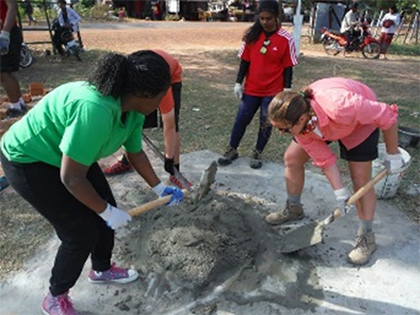
Then when everyone else left, Arjun and Jordan from the room next door came to our room (Alex and I) and we kept talking till 1.00 in the morning as the next day was devoted to only shopping. The last day with my new family was spent shopping at both the old and new market.
I hadn’t bought many gifts for my friends and family so I grabbed this opportunity and spent $210 hopping from one market to the other. In the last half an hour, Gemma, Virgil, Linda, Alex and I went to get manicures and fish spa’s which was a lot of fun. We also got matching necklaces. Nathan lost the bracelet competition against me.
We then went back to the hotel Everyone went swimming while I had to go the hospital for the third time. I spent $77 on the hospital visits. After coming back, we had to leave for dinner which was a buffet dinner. We took tuk-tuks. I was in a tuk-tuk with Jerome, Lydia, Sonia and Arjun. It was a very thrilling journey to the restaurant. After dinner we watched the Apsara dance performance which was very graceful. We then had to fill up reflection forms, were given Round Square badges and I ended up crying a lot as it was time to say goodbye.
Everyone went to their rooms, but I was still upset so I went to my friends rooms and helped them packed. I woke up early the next day to say bye to everyone. I planned to meet Shreyan and Nasir at the airport since they had a 10-hour layover. I was leaving in the 5th slot of students with Emilie, Sarah, Jerome, Lydia and Huw. My flight was delayed by ½ hour so I got time to shop at the limited shops at Siem Reap airport. When I reached Suvarnabhoomi airport, I spent 2 hours looking for my friends. Luckily, I found Shreyan before leaving. We chatted till it was time for me to board my flight. He came with me till my gate as they had stopped me to check my passport and visas. It was a bit scary. After saying bye to him, I made one quick call to my parents to tell them that my flight was going to be delayed due to a thunderstorm. It was raining like crazy and there was thunder and lighting. After landing in Mumbai I was surprised as my grandfather came to meet me!!!
Click here to view PDF
Click here to view PDF
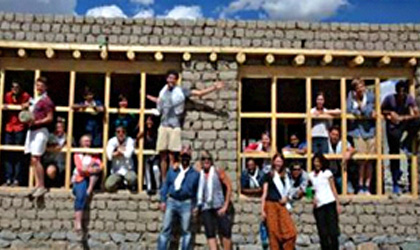
Before I went to Ladakh for RSIS 2013, I had no idea that I was capable of climbing over 600 steps in 20 minutes (and that too at around 3000m above sea level!). This service project has undoubtedly been one of the most thrilling experiences of my life. Spending 3 weeks in an environment completely different from that at home is no easy task, but it is exactly what made the trip so memorable.
Those 3 weeks were divided into 3 main phases- the acclimatization phase in Leh (10th to 12th July), the project phase in Thiksey (13th to 26th July) and finally, the trek phase from Shang to Rumbach (27th July to 31st July).
The project phase consisted of helping with the construction of a dormitory and the second storey of a building for the Lamdon Model School in Thiksey. Some of the school students have to walk for several days to get to a road before getting on a bus to the school, so you can imagine how important a new dormitory is to the school community! Our tasks involved normal construction jobs like- loading bricks from the brickyard onto a truck, forming long chains to move the bricks from one point to another, mixing and moving buckets of mud, picking up rocks, cleaning up the worksite and other general manual labour. Word of advice: take LOTS and LOTS of sunscreen, and wear full sleeved tops and long pants as far as possible. You will get very, very tanned.
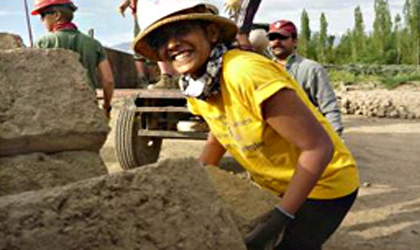
The project team comprised of 16 students and 6 adults, representing the countries of India (obviously), China, Korea, England, USA, Canada, Germany and Peru.
There were three work periods each day- each of which was 2 hours long. The whole group was split into four sub-groups and one of these sub-groups took on domestic duties each day in rotation, where they were responsible for tidying the camp and helping the kitchen staff. There was certainly a great deal of work, but also a great deal of personal time for other activities. For the most part, we used our personal time sleeping under the shade of a tree, reading books, cleaning up and washing our clothes.The toilets and washing facilities at the camp were, as expected, primitive.
To bathe, we took one (or at the most, two) buckets of ice-cold water and went into a tiny tent with no lighting. Doing our own laundry using soap-cakes and buckets was possibly the only part of the trip that was not…fun. That being said, I still think it was an experience worth having.
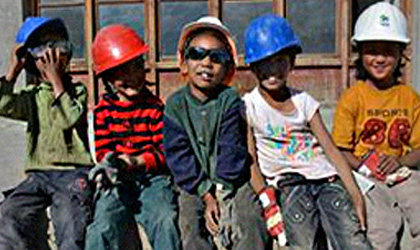
The best part of the work sessions was when we would take small breaks and the little school kids would come play with us. I was both enraptured and shocked by the immense joy and energy of the kids. They lived in such bleak conditions, yet somehow they managed to turn that bleak place into one bubbling and bursting with energy and life. As a group, we decided that we wanted to do something special to leave our mark on The Lamdon Model School, and so we decided to paint murals on the walls of the existing dormitory.
Our campsite was located right next to the Thiksey Gompa (monastery), which is the largest gompa in Ladakh. On one of the mornings, we climbed up all 12 stories of the monastery so that we could watch the sunrise above the mountains. On another morning, we attended the prayer ceremony that is held there on a daily basis. We were very lucky to have had the opportunity to converse with one the young monks there, who told us all about Buddhism, and what it’s like to live in a monastery and be a 21st century monk.
We had a one-day break mid-Project (on 20th July) during which we visited the Pangong Lake, a stunning high altitude site! The day trip to Pangong Lake was a very long day of driving (5 hours one way), but we got to go over the third highest motorable road in the world!
The trek phase was 5-days (4-nights) long, from Shang to Rumbach. It was a truly breath-taking trek, with views across the Karakorum mountain range! We went over some very high passes (at approximately 5000m), and crossed quite a few rivers. We had the option of sleeping out under the stars at night, but on most nights it was too cold to do so. On the one night that we did sleep outside, the night sky was absolutely beautiful- we saw so many shooting stars!
At the end of the trek, we spent two more days in Leh. We spent most of this time shopping in the Leh market and the Tibetan refugee markets! On one afternoon, we even visited a donkey sanctuary, which was quite a strange but wonderful experience.
In summary, this trip allowed me to make new friends, get exposed to new cultures, face new challenges and learn new skills. I am now so much more aware of my strengths and weaknesses! Words cannot express how grateful I am to the school for giving me this opportunity. Although I missed the first 2 weeks of IBY12 because of this trip, it was quite easy to catch up with the work. I strongly encourage my juniors to go on the RSIS trips in 2014!