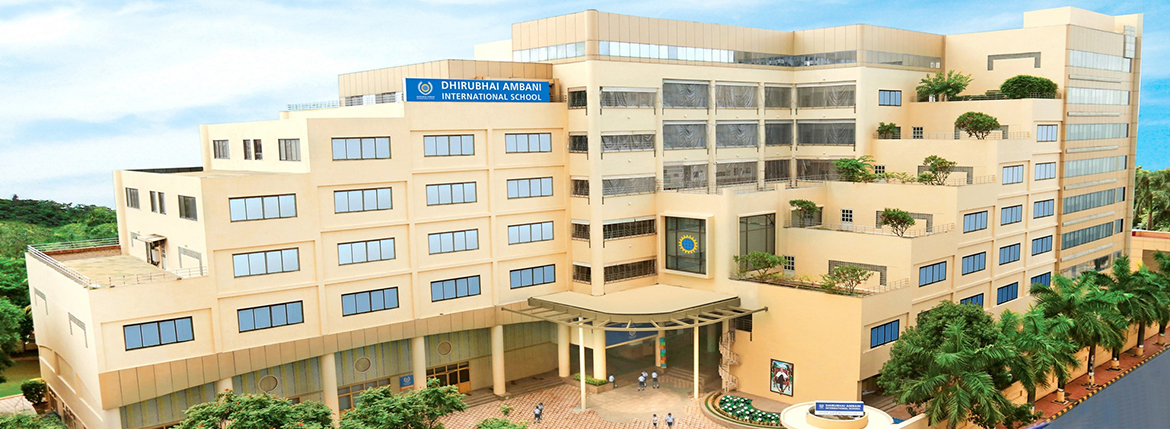
On October 19th and 20th 2021, DAIS organize an online Indo-Spanish exchange with students from San Silvestre and St. Georges College in Peru, as a continuation of the Indo- Spanish exchange sessions initiated last year. This would be the 4th such session in the series. DAIS students studying Spanish B, hosted 18 students from each exchange school. The interaction made students realize that though they seemed vastly different, but they were similar in their curiosity and involvement with each other’s cultures. The theme of the session of this exchange was identities and language, and, hence, was centered within the diverse Indian and Peruvian cultures, traditions, and experiences that participants brought to the discussion.
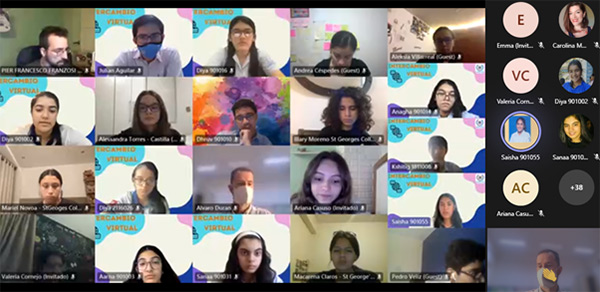
The session included thoughtfully curated activities that began with introductions and concluded with a pledge to the conservation of our authentic national and cultural identities. The session opened with an introductory presentation with general online instructions about guidelines to navigate the Microsoft Teams platform, as well as a short video amalgamating various perspectives of DAIS students about what identity means to them, how culture influences identity and a word that they think describes them. Following this we moved into introductions where each person would share their name, age, school, and one thing that contributed to their identity or that they liked. We also played a more interactive game, in which students were encouraged to bring one object that represented their identity: pictures of family, guitars, necklaces, vinyl and stuffed animals, amongst other things were brought and shared with the group. To fully engage with the theme of identity and language, participants were assigned a pre-conference task of making a poster that condensed their sense of self into one visual, and these posters were shared with the other participants. Students talked about the reasons for included certain places, objects, or people in their poster, and made connections to their cultural heritage, all of which gave the rest of the group a wonderful insight into them as an individual. We also proposed a few prompts to the participants that they were urged to reflect upon and respond to, after which we concluded with formulating a pledge to preserve and keep alive our national and regional traditions and identities.
The conversation during the exchange was especially opinionated, which made the session insightful and authentic. Students from both schools, supported the perspective that national heritage and identity became a large part of their lives along with friends, families, and vacations, all of which were reflected in their pre-conference work. During the discussion of prompts we had dialogue about the different traditions that each country inherited from its history. For example, in Peru some families eat 12 grapes on new year’s at 12AM, while Christmas is an important festival for them. In India, Navratri and Diwali take precedence with the firecrackers, Indian food, and lights that they inevitably bring. Further, we talked about how our personalities are shaped by the language we speak: students shared that they were slightly more nervous speaking Spanish, or any language that wasn’t their first language. They didn’t push themselves to experiment with new sentence structures and vocabulary, in contrast to their first language that was fluent and comfortable to converse in. We also explored conservation of culture, and devised a pledge to be more aware of our cultural roots and stay connected to them by passing on stories, cooking authentic food, watching and supporting local art and dance.
Perhaps the most important learning from this experience was the unity and similarity we were able to find within diverse cultures and identities across the world: we liked similar music, participated similar activities, and faced similar problems like the degradation of culture. We were able to interact with adolescents our age from Spanish speaking countries, and this helped gain a global perspective on our theme of identity and language. Even feedback from the participants themselves included gratitude for a space to voice strong opinions, and, therefore, acceptance of several perspectives and active listening were skills that we were pushed to embrace through this session. We will ensure that future sessions are as educational and insightful as this one!
Some reflections from the student leaders:
“I really enjoyed talking to and learning from everyone and communicating through a language I love speaking.”
“Getting to actually use a language that we have been learning for 3 years to interact with other native speakers of the language was an insightful and inspiring experience”
Student Leaders: Ananya Srinivasan, Sanaa Beriwala, Saisha Gupta, Diya Shah and Kshitig Seth
Video link: